
Diamonds have a way of holding onto memories.
They mark engagements, anniversaries, birthdays, graduations, and other milestones. A diamond ring might represent the beginning of a marriage. A pair of diamond earrings may have been handed down from a grandmother. A diamond pendant might have been purchased to celebrate a personal accomplishment.
But diamonds can represent something else, too: value.
If you have diamond jewelry sitting in a jewelry box that you rarely wear, you may be wondering what it’s worth. Maybe you’re considering selling it. Perhaps you need short-term cash but aren’t ready to permanently part with it. Or you may be on the other side of the transaction, looking for a beautiful diamond without paying traditional jewelry-store prices.
At Smyrna Pawn in Smyrna, Georgia, customers can explore options for buying, selling, and pawning jewelry, including diamonds.
Before you make a decision, it helps to understand what makes one diamond different from another—and why two stones that look almost identical can have very different values.
Diamonds Are More Than Just Carat Weight
One of the most common misconceptions about diamonds is that size determines value.
You’ll often hear someone say, “It’s a one-carat diamond,” as though that tells the whole story.
It doesn’t.
Carat weight is certainly important, but professional diamond evaluation involves much more. The traditional starting point is known as the 4Cs:
- Cut
- Color
- Clarity
- Carat weight
Understanding these four characteristics can help you make more informed decisions whether you’re buying a diamond or bringing one to Smyrna Pawn to sell or pawn.
Cut: The Secret Behind a Diamond’s Sparkle
People often confuse a diamond’s cut with its shape.
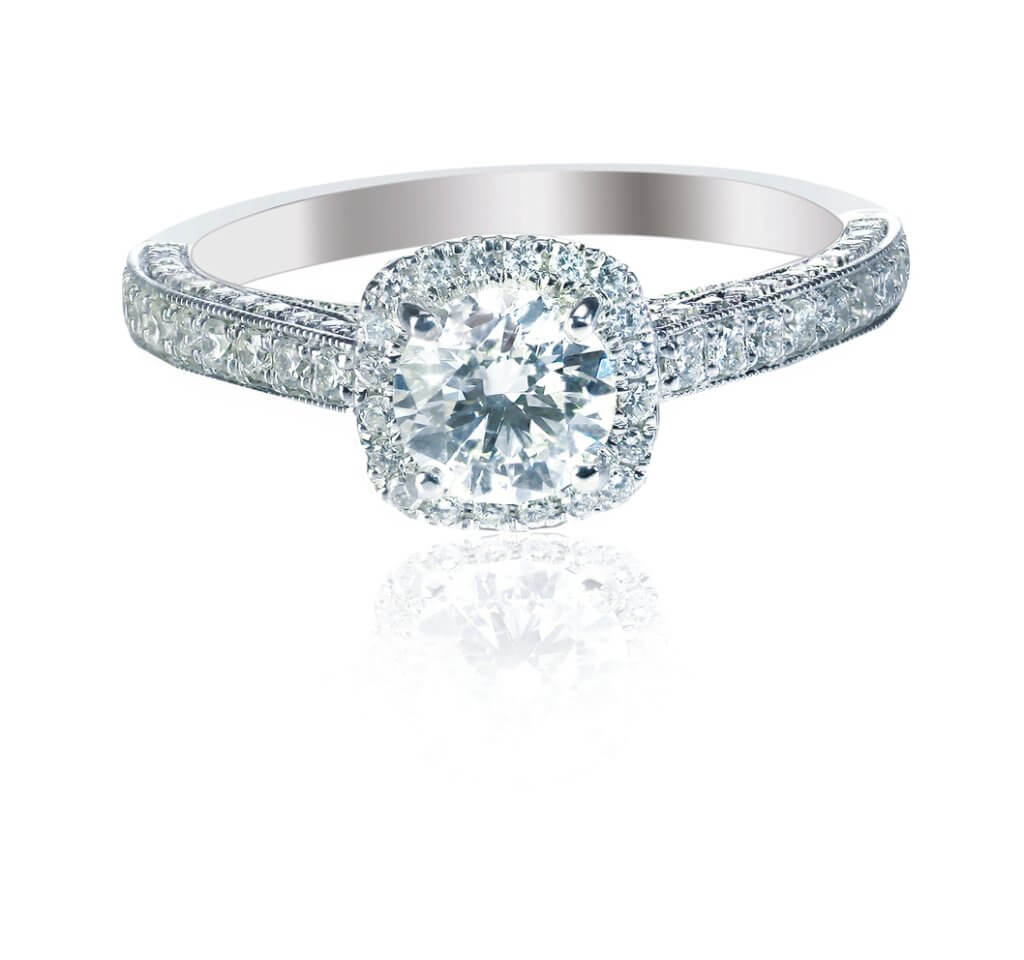
Shape describes whether the diamond is round, oval, pear, emerald, princess, cushion, marquise, or another style.
Cut refers to how well the diamond’s facets interact with light.
A beautifully cut diamond can appear bright, lively, and full of sparkle. A poorly proportioned diamond may look dull even if it has excellent color and clarity.
That’s because light entering a well-cut diamond is reflected through its facets and returned through the top of the stone. The proportions, symmetry, and polish all contribute to the diamond’s visual performance.
This is why a smaller diamond with an excellent cut can sometimes look more impressive than a larger diamond with poor proportions.
When shopping for a diamond, don’t focus only on size. Look at how the stone actually performs in the light.
Color: When Less Can Mean More
Diamond color grading can seem backward at first.
With traditional white diamonds, less visible color is generally considered more desirable.
The Gemological Institute of America, or GIA, uses a color scale beginning with D, representing colorless, and continuing through Z, where increasingly noticeable yellow or brown color may be present.
To an untrained eye, differences between neighboring color grades can be extremely subtle.
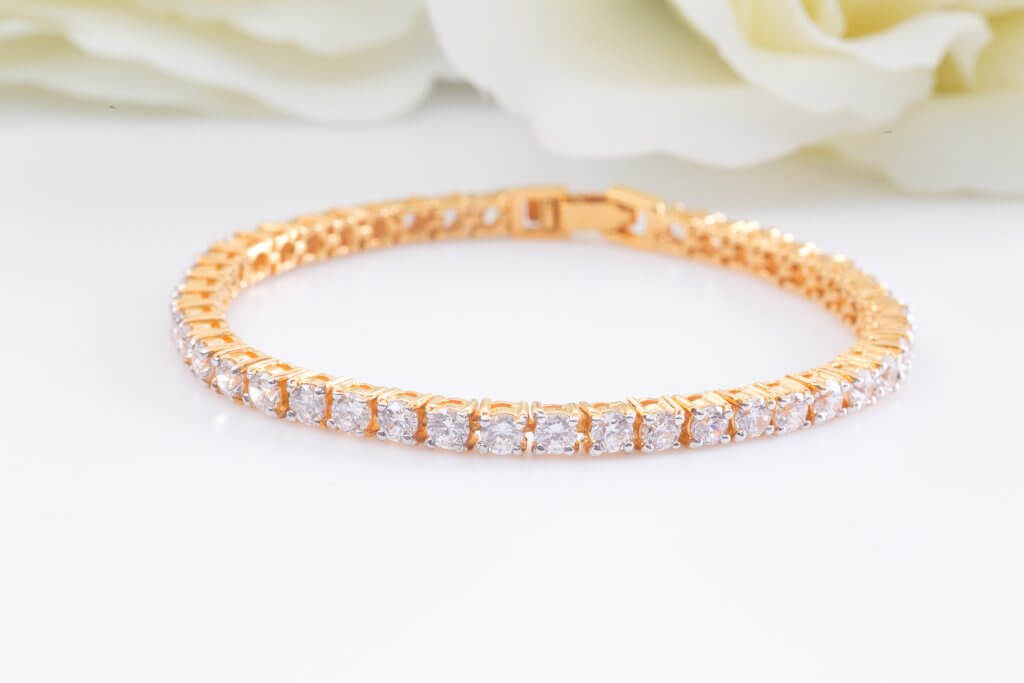
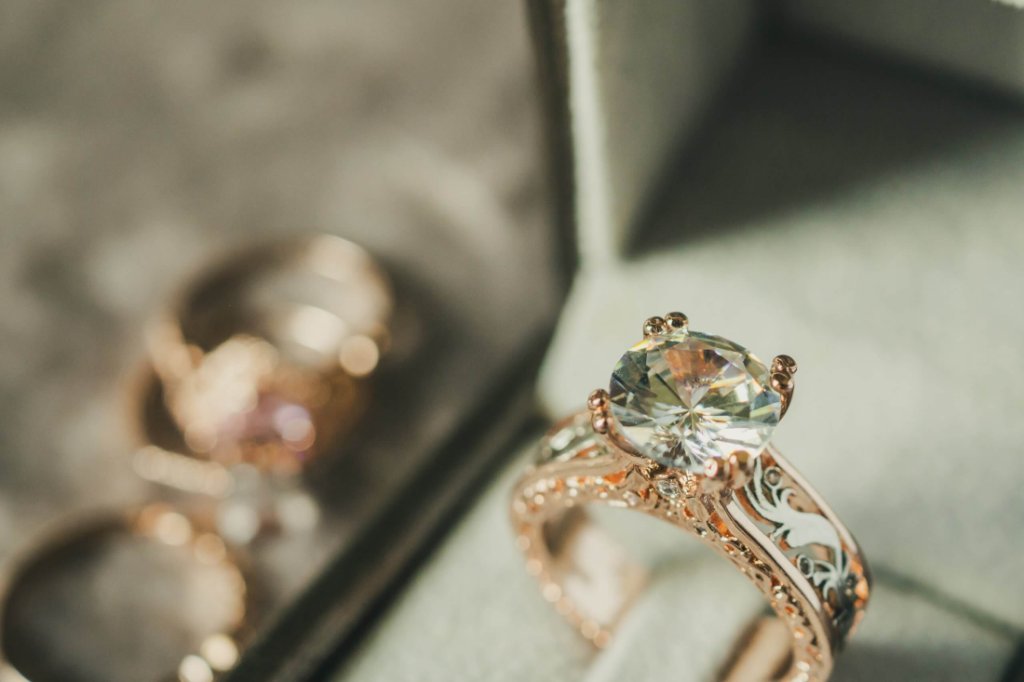
The setting can also influence how a diamond appears. Yellow or rose gold, for example, may interact differently with a diamond’s color than white gold or platinum.
Then there are fancy-color diamonds.
Yellow, pink, blue, green, and other naturally colored diamonds fall into a different category. Depending on the color, intensity, size, and rarity, some fancy-color diamonds can be extremely valuable.
So when evaluating a diamond, color needs to be considered in context.
Clarity: Every Diamond Has a Story
Natural diamonds are formed under tremendous heat and pressure deep within the earth.
During that process, internal characteristics called inclusions and external characteristics called blemishes can develop.
Clarity grading evaluates those characteristics.
Some diamonds have inclusions that are difficult to detect even under magnification. Others may have characteristics visible to the naked eye.
Clarity grades range from exceptionally rare Flawless stones to Included diamonds with more noticeable characteristics.
But here’s something important for everyday diamond shoppers:
You don’t necessarily need the highest clarity grade to own a beautiful diamond.
Many diamonds have inclusions that aren’t visible without magnification. An “eye-clean” diamond can look stunning while potentially costing considerably less than a technically higher-clarity stone.
For buyers, understanding this can help you focus your money on characteristics that matter most to you.
For sellers, clarity is one of several factors that may influence the value of your diamond.
Carat: Understanding Diamond Weight
Carat measures weight, not physical dimensions.
One carat equals 200 milligrams.
Two diamonds with identical carat weights can look different in size depending on their shape and proportions. A stone’s cut can influence how much of its weight is visible when looking down at the diamond.
Diamond prices also don’t increase at a perfectly consistent rate as carat weight increases.
Certain weights—such as one carat, two carats, and other significant thresholds—can be particularly desirable in the market.
But again, carat weight doesn’t exist in isolation.
A large diamond with poor color, clarity, or cut characteristics may be worth less than someone expects simply based on size.
Natural Diamonds vs. Lab-Grown Diamonds
Today’s diamond market includes both natural and laboratory-grown diamonds.
Natural diamonds formed within the earth over an extraordinary period of time. Lab-grown diamonds are created using technology that replicates the conditions under which diamonds form.
Lab-grown diamonds are real diamonds in terms of their chemical and physical properties, but their market dynamics can be very different from natural diamonds.
This distinction is particularly important when you’re buying, selling, or pawning jewelry.
Consumers should know what they’re purchasing, and sellers should understand what they own.
If you aren’t sure whether your diamond is natural or laboratory-grown, professional testing and evaluation may be necessary.
Don’t assume that an inherited stone is natural simply because it’s in an older-looking setting, and don’t assume you can reliably identify a lab-grown diamond just by looking at it.
Does a Diamond Certificate Matter?
Some diamonds are accompanied by grading reports from independent gemological laboratories.
One of the best-known is GIA.
A grading report can provide information such as the diamond’s measurements, carat weight, color, clarity, cut characteristics, and other identifying details.
If you have paperwork for your diamond, keep it.
If you’re considering selling or pawning diamond jewelry, bring any documentation you have with you.
But don’t panic if you’ve lost the paperwork.
Many people inherit jewelry without boxes, receipts, or grading reports. Others have owned their diamonds for decades and no longer know where the original documents are.
The lack of paperwork doesn’t automatically mean your diamond has no value.
The Setting Has Value, Too
When evaluating diamond jewelry, don’t forget about everything surrounding the stone.
A diamond may be set in:
- 10K gold
- 14K gold
- 18K gold
- White gold
- Yellow gold
- Rose gold
- Platinum
The piece may also contain additional diamonds or colored gemstones.
Designer jewelry can add another consideration. A signed piece from a desirable luxury jewelry house may be evaluated differently from an unbranded piece with similar materials.
The entire item needs to be considered—not just the center stone.
This is one reason an in-person evaluation can provide more useful information than trying to estimate value from a photograph.
Why Your Jewelry Appraisal Isn’t Necessarily Its Cash Value
This surprises many diamond owners.
Perhaps you have an appraisal stating that your ring is worth $10,000.
Does that mean someone will pay you $10,000 for it today?
Not necessarily.
Insurance replacement appraisals are generally intended to estimate what it might cost to replace an item through an appropriate retail channel. That isn’t the same thing as the amount a buyer may offer for a pre-owned diamond today.
Retail price, insurance replacement value, resale value, and pawn-loan value are different concepts.
Current market demand matters. So do the diamond’s characteristics, condition, setting, and numerous other factors.
An older appraisal can still provide useful information, so bring it with you. Just don’t assume the number printed on it represents a guaranteed cash offer.
Should You Sell Your Diamond Jewelry?
There are many reasons people decide to sell diamonds.
An engagement ring from a previous relationship may no longer have sentimental meaning. You may have inherited jewelry that doesn’t fit your style. Perhaps you have several pieces and would rather use the value toward something you need today.
Sometimes selling simply makes sense.
If you know you’re unlikely to wear the jewelry again and have no desire to keep it, selling can turn an unused asset into cash.
Before accepting an offer, however, it’s important to understand what you’re selling.
Bring the complete piece along with any documentation, receipts, grading reports, or original packaging you have available.
Then ask questions.
A reputable evaluation should help you better understand the item and the offer being made.
What If You Don’t Want to Sell Your Diamond?
Sometimes you need money, but selling a sentimental piece isn’t the right choice.
That’s where a pawn loan may provide an alternative.
Instead of permanently selling the diamond jewelry, you use an eligible item as collateral for a loan. The pawnbroker holds the item securely during the loan period, and you have the opportunity to reclaim it according to the terms of the pawn transaction.
This can be particularly appealing when the jewelry has emotional significance.
Maybe it’s your grandmother’s ring.
Maybe you still wear it for special occasions.
Maybe you simply don’t want to make a permanent decision because you need temporary financial flexibility.
At Smyrna Pawn, customers can discuss whether pawning their diamond jewelry may be an appropriate option.

Buying Pre-Owned Diamonds Can Be a Smart Choice
Pawn shops aren’t only places to sell or borrow against jewelry.
They can also be great places to shop for diamonds.
Pre-owned diamond jewelry may offer significant value compared with shopping exclusively through traditional retail channels.
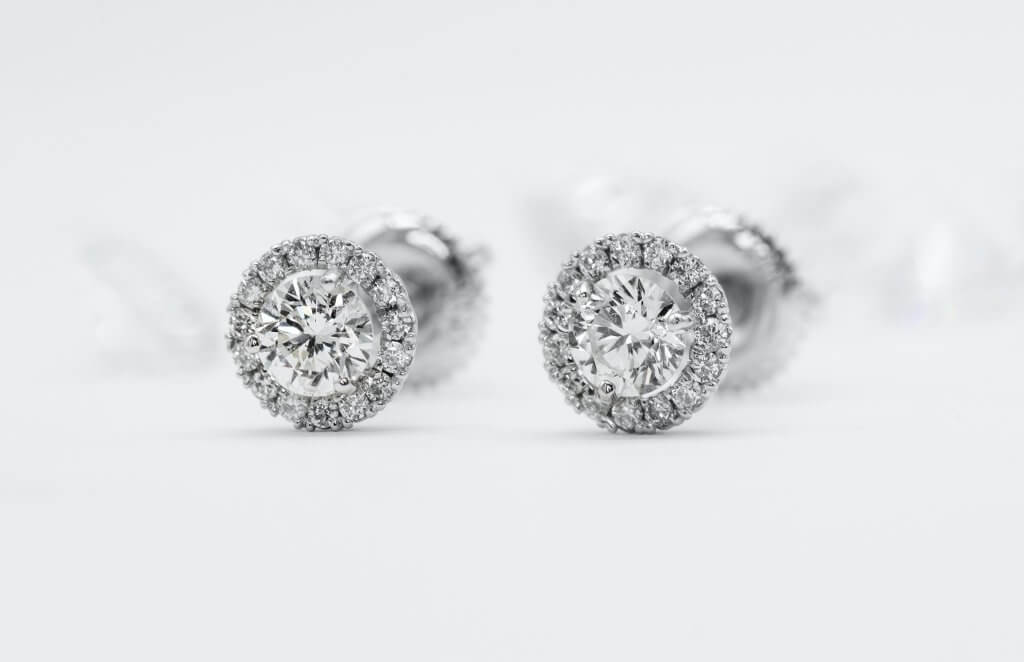
You might find engagement rings, wedding bands, diamond earrings, pendants, bracelets, and other pieces.
And “pre-owned” doesn’t mean worn out.
Fine jewelry is designed to last. Gold, platinum, and diamonds can remain beautiful for generations when properly cared for.
Sometimes a piece needs nothing more than professional cleaning to reveal just how beautiful it is.
Shopping for an Engagement Ring?
An engagement ring is one of the most emotionally significant jewelry purchases many people make.
But it doesn’t have to begin with an enormous retail price tag.
Shopping pre-owned can give couples additional options and potentially allow them to put more of their budget toward the diamond or design they really want.
When comparing rings, think beyond carat weight.
Look at the complete piece.
Does the diamond sparkle?
Do you love the setting?
Is the ring comfortable?
Does it fit the person’s style?
A ring doesn’t become meaningful because of where it was purchased. It becomes meaningful because of what it represents.
Take Care of Your Diamond Jewelry
Diamonds are famous for their hardness, but diamond jewelry still requires care.
The stone may be durable, but settings can wear down over time.
Prongs can bend or loosen. Chains can break. Clasps can wear. Smaller accent stones can become loose.
Clean your jewelry appropriately and periodically inspect it for damage.
If a diamond feels loose in its setting, stop wearing the piece until it can be checked.
Be especially careful when doing activities that can damage the setting, such as heavy yard work, construction, or vigorous exercise.
Proper care helps protect both the beauty and value of your jewelry.
Don’t Let Unwanted Diamonds Sit Forgotten
Open your jewelry box.
Is there a diamond ring you haven’t worn in five years?
A pendant that’s no longer your style?
Diamond earrings inherited from a relative that have never left their box?
You may be holding onto more value than you realize.
You don’t have to know the carat weight, clarity grade, or exact type of setting before asking about it.
That’s what an evaluation is for.
Buy, Sell, or Pawn Diamonds at Smyrna Pawn
For customers in Smyrna, Georgia, and the surrounding Cobb County area, Smyrna Pawn provides a local option when you’re considering what to do with diamond jewelry.
If you want to sell a diamond, bring it in and learn more about what you have.
If you need cash but want the opportunity to keep your jewelry, ask about a pawn loan.
And if you’re shopping for your next piece, take a look at the pre-owned diamond jewelry available in the store.
Knowledge makes every diamond transaction easier.
Understanding the 4Cs, knowing the difference between natural and lab-grown diamonds, recognizing the importance of the setting, and having realistic expectations about resale value can help you make a more confident decision.
Your Diamond May Be Worth a Closer Look
Diamonds may be small, but they can carry tremendous significance—and sometimes substantial value.
The ring you no longer wear may help cover an unexpected expense. An inherited diamond could be more valuable than you realized. A pre-owned engagement ring might give you the beauty you’re looking for while staying within your budget.
Whatever brings you through the door, you don’t need to be a diamond expert before visiting Smyrna Pawn.
Bring your jewelry. Bring any paperwork you have. Ask questions.
Whether you’re looking to buy, sell, or pawn diamonds in Smyrna, Georgia, the team at Smyrna Pawn can help you explore your options and make an informed decision.
Because a diamond shouldn’t spend its entire life forgotten at the bottom of a jewelry box.
It may be time to discover what yours can do for you.