
If you opened your jewelry box today, how many pieces would you find that you haven’t worn in a year? Five years? Maybe even longer?
Diamond jewelry has a way of accumulating over a lifetime. There may be an old engagement ring tucked into the back of a drawer, a diamond pendant inherited from a relative, earrings that no longer match your style, or a tennis bracelet you haven’t worn in years.
In our last blog, we talked about how diamonds are about much more than engagement rings. This time, we’re taking the next step: What should you do when you own diamond jewelry you no longer wear?
At Smyrna Pawn in Smyrna, Georgia, customers can explore several possibilities. You may decide to sell your diamond jewelry, use it as collateral for a pawn loan, or simply learn more about what you own before making a decision.
The important thing is not to assume that jewelry sitting unused has no value.
Start With the Jewelry You Already Own
Most people don’t think of their jewelry box as a place to look when they need extra money.
But perhaps they should.
Diamond jewelry combines two things that may contribute to value: gemstones and precious metals. Even if a piece is no longer fashionable or is damaged, its components may still be worth evaluating.
Take a look for items such as:
- Diamond engagement rings
- Wedding and anniversary bands
- Diamond stud earrings
- Single diamond earrings
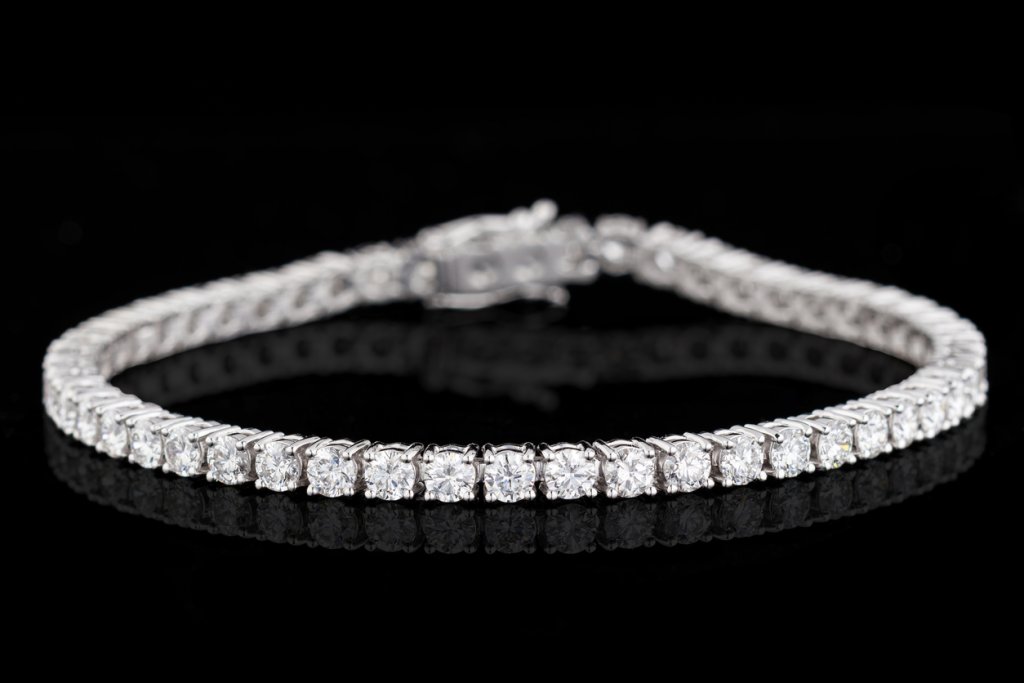
- Tennis bracelets
- Diamond pendants
- Gold and diamond necklaces
- Men’s diamond rings
- Cocktail rings
- Vintage and estate jewelry
- Diamond watches
- Broken diamond jewelry
- Loose diamonds
Some pieces may be obvious candidates for selling. Others may require more thought.
That’s okay.
The first step is simply finding out what you have.
“I Paid a Lot for This Ring. Is It Still Worth That Much?”
This is one of the biggest misconceptions surrounding jewelry.
The price originally paid at a retail jewelry store is not necessarily the same as the amount the piece will bring on the secondary market.
A new piece of jewelry can include costs associated with manufacturing, distribution, marketing, retail operations, brand positioning, and other expenses. Once jewelry enters the pre-owned market, it is evaluated differently.
That doesn’t mean your jewelry doesn’t have value.
It means retail price and resale value are two different things.
When evaluating diamond jewelry, professionals may consider factors including the diamond itself, precious-metal content, condition, craftsmanship, desirability, and the current market.
Understanding that distinction can help you approach the selling process with more realistic expectations.
The Diamond Is Only Part of the Story
Diamonds receive most of the attention, but the setting matters too.
Your diamond may be mounted in:
- Yellow gold
- White gold
- Rose gold
- Platinum
- Another precious metal
Gold jewelry may be marked 10K, 14K, 18K, or with another indication of purity.
Because precious metals have value of their own, an older piece of diamond jewelry may be worth evaluating even when the design isn’t currently popular.
This is particularly important with inherited and vintage jewelry.
A ring that looks outdated to you may still contain valuable materials.
Does the Size of the Diamond Determine Its Value?
Size matters, but it isn’t everything.
Two diamonds that appear similar in size can have very different characteristics and values.
Diamonds are traditionally evaluated using the 4Cs: cut, color, clarity, and carat weight.
Carat tells us the weight of the diamond, but larger doesn’t automatically mean better.
A diamond’s cut affects how it handles light and contributes to its brilliance. Color and clarity can also affect desirability and value.
Shape can matter as well.
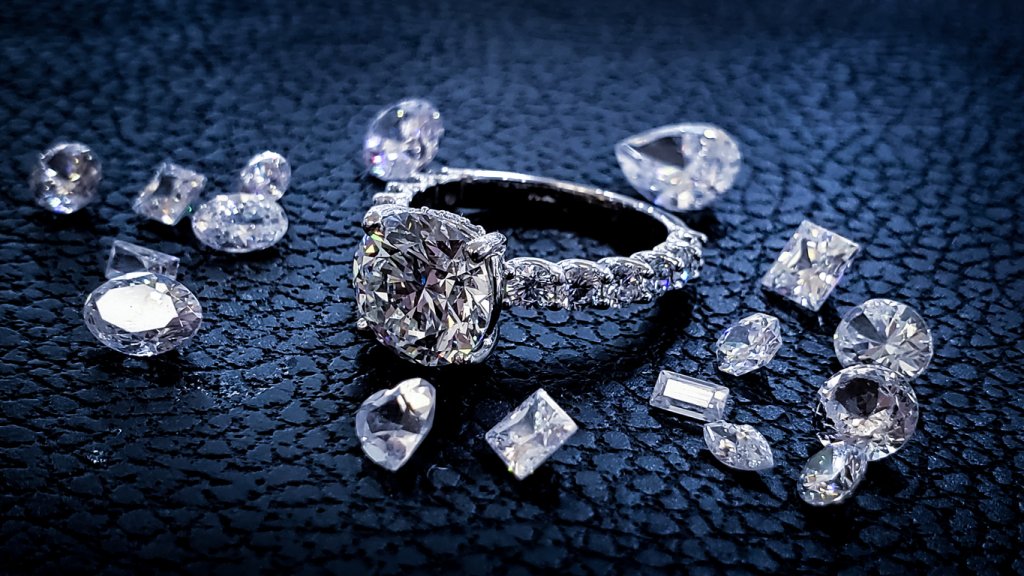
Round diamonds have long been popular, while oval, pear, emerald, cushion, princess, marquise, and other shapes move in and out of fashion.
That’s why looking at a diamond and guessing its value based solely on its apparent size isn’t very reliable.
Should You Sell or Pawn Your Diamond Jewelry?
This is where the decision becomes personal.
Selling and pawning aren’t the same thing.
Selling Diamond Jewelry
Selling may make sense when you no longer want the item.
Perhaps you’ve had an old engagement ring in a drawer for a decade. You have no intention of wearing it again, and it doesn’t carry sentimental importance.
Why continue storing something you don’t use?
Selling could allow you to turn that unwanted jewelry into money for something that matters to you today.
You might use the money toward:
- An unexpected bill
- Travel
- Home repairs
- A new purchase
- Holiday expenses
- Paying down debt
- A family expense
- Another piece of jewelry you’ll actually wear
Once you sell an item, however, you’re permanently giving up ownership.
That makes selling a better choice for jewelry you’re comfortable letting go.
Pawning Diamond Jewelry
What if you need money but don’t want to sell the jewelry?
A pawn loan may provide another option.
With a pawn loan, an item of value is used as collateral. Your diamond jewelry is held during the loan period rather than permanently sold.
This distinction can be important when jewelry has sentimental meaning.
You may need access to money today but still want the opportunity to reclaim the jewelry according to the terms of the pawn transaction.
Before deciding between selling and pawning, ask yourself a simple question:
Would I be upset if I never had this piece again?
If the answer is yes, ask about your pawn options before deciding to sell.
What About an Old Engagement Ring?
Engagement rings are among the most emotionally complicated pieces of jewelry people own.
Sometimes an engagement ring represents a wonderful marriage and remains treasured for a lifetime.
Other times, life changes.
A relationship ends. A ring gets replaced. A new wedding set is purchased. Or an inherited engagement ring simply isn’t something the recipient will ever wear.
An old engagement ring doesn’t have to remain hidden indefinitely.
Selling it may allow you to transform an object connected to the past into something useful for your future.
For others, the ring still carries sentimental importance, even if it isn’t being worn. In that situation, pawning may be an option worth discussing if short-term funds are needed.
There isn’t one right answer.
The right choice depends on what the jewelry means to you.
Inherited Diamond Jewelry Deserves a Closer Look
Inherited jewelry presents another common situation.
Imagine receiving your grandmother’s jewelry box.
Inside are several rings, earrings, necklaces, and perhaps a bracelet. Some pieces are clearly marked. Others aren’t. You don’t know which diamonds are valuable, whether the stones are natural or lab-grown, or whether the settings are gold.
Don’t make assumptions.
Before dividing, selling, altering, or discarding inherited jewelry, consider having it evaluated.
Knowing more about what you own can help you make better decisions.
You may decide to keep a particularly meaningful piece while selling jewelry no one in the family wants.
You might even use proceeds from several unwanted pieces to purchase or create something that becomes meaningful to the next generation.
Can You Sell Broken Diamond Jewelry?
Absolutely bring it in for evaluation.
A piece doesn’t necessarily lose all of its value because it is damaged.
Consider a diamond ring with a bent setting.
The ring may not be wearable in its current condition, but the diamond hasn’t disappeared. Neither has the precious metal.
The same idea applies to:
- Broken chains
- Damaged clasps
- Missing side stones
- Bent rings
- Single earrings
- Outdated settings
- Scratched jewelry
Don’t spend money repairing an item solely because you think it needs to look perfect before you sell it.
Bring it in first.
What About a Single Diamond Earring?
This deserves special attention because almost everyone who has owned earrings long enough has lost one.
You search the bedroom.
You check the car.
You look under furniture.
Eventually, you accept that the other earring is probably gone.
Then the surviving earring spends the next five years sitting alone in your jewelry box.
Why?
A single diamond earring may still contain a diamond and precious metal.
You may never wear it again, but that doesn’t automatically make it worthless.
Add it to the pile of jewelry you want evaluated.
Do Diamond Certificates Matter?
Some diamonds are accompanied by grading reports from recognized gemological laboratories.
If you have paperwork associated with your diamond, bring it with you.
A grading report can provide useful information about the characteristics of a stone.
However, don’t assume you can’t have your jewelry evaluated because you’ve lost the paperwork.
Jewelry gets separated from boxes, receipts, appraisals, and certificates all the time.
Bring what you have.
An Appraisal Isn’t Necessarily What Someone Will Pay
Another area of confusion involves jewelry appraisals.
An appraisal prepared for insurance purposes may show a replacement value. That number can be very different from what the item might sell for in the pre-owned market.
This surprises people.
Imagine an insurance document showing a significant replacement value for a ring. It can be natural to assume someone should be willing to hand you that amount in cash.
But the two numbers serve different purposes.
Insurance replacement values help estimate what it could cost to replace an item under particular circumstances.
Resale value reflects what an item may reasonably bring in the secondary market.
When you’re considering selling, you want to understand the current market for the actual item, not simply rely on an old insurance document.
Natural Diamonds and Lab-Grown Diamonds
The diamond market has changed significantly with the growth of lab-grown diamonds.
Lab-grown diamonds are real diamonds with essentially the same chemical composition as natural diamonds, but they are created through technological processes rather than forming underground over immense periods of time.
The markets for natural and lab-grown diamonds are different, and pricing can change.
This is another reason professional evaluation matters.
Don’t rely on what someone paid several years ago—or on what a seemingly similar diamond is advertised for online—to determine what your stone may be worth today.

Why Pawn Shops Buy Diamond Jewelry
Pawn shops have been part of the secondary jewelry market for generations.
At Smyrna Pawn, jewelry is part of the broader world of items customers can buy, sell, and pawn.
That gives customers several options in one place.
Have jewelry you no longer want?
Ask about selling it.
Need money but want to keep ownership of a meaningful piece?
Ask how a pawn loan works.
Looking for diamond jewelry?
Check the store’s current inventory.
Because pawn shop inventory changes as items come and go, shopping can feel a little like treasure hunting.
The diamond ring or bracelet available today may not be there next week—and next week’s selection may contain something completely different.
Buying Pre-Owned Diamonds Is Worth Considering Too
There’s another side to the diamond conversation.
Maybe you aren’t trying to sell anything.
Maybe you’re shopping.
Pre-owned diamond jewelry can offer an appealing alternative to buying new. You may discover distinctive styles, vintage pieces, classic designs, or jewelry that fits your budget better than comparable new retail options.
Consider pre-owned jewelry when shopping for:
- Anniversaries
- Birthdays
- Valentine’s Day
- Mother’s Day
- Christmas
- Graduations
- Milestone celebrations
- Engagements
- “Just because” gifts
And don’t forget yourself.
You don’t need a special occasion to buy a piece of jewelry you love.
Don’t Let Your Jewelry Box Become a Storage Unit
We keep things for all kinds of reasons.
Sometimes it’s sentiment.
Sometimes it’s habit.
And sometimes we simply haven’t taken the time to decide what to do.
But if you have diamond jewelry that hasn’t seen daylight in years, it may be time to take another look.
Separate your jewelry into three groups:
Keep it. Sell it. Learn more about it.
Keep the pieces you love and wear.
Consider selling the pieces you know you no longer want.
And bring in the pieces you’re uncertain about so you can better understand your options.
You don’t have to decide everything immediately.
Information gives you choices.
Visit Smyrna Pawn With Your Diamond Jewelry
That old ring in the back of your jewelry box may be more useful than you realize.
The diamond earrings you stopped wearing, the bracelet you inherited, the broken pendant you’ve been meaning to repair, and even that lonely single earring are worth another look.
Bring your diamond jewelry to Smyrna Pawn in Smyrna, Georgia, and ask about your options.
Whether you want to sell diamond jewelry, pawn diamonds for a loan, or shop for pre-owned diamond jewelry, Smyrna Pawn can help you explore the possibilities.
Your jewelry has already been part of your story.
Now it may be time to decide what comes next.